The Melody Rhythms Blog
Designing Sound for Modern Commercial Spaces
The Hidden Power of Sound in Hospitality Design
Many of the world’s most immersive environments have something in common.
Theme parks, casinos, and luxury resorts all carefully design how their spaces sound.
While guests may notice architecture, lighting, and decor, sound often works quietly in the background, shaping the emotional atmosphere of a place. But in the best designed environments, music and sound are never random. They are intentional.
By looking at how different industries use sound, we can learn important lessons about designing atmosphere in hospitality spaces.
What Disney Teaches Us About Environmental Storytelling
The Walt Disney Company parks are masters of its own sound environment. As visitors move from one land to another, the music gradually changes to match the theme of the environment.
Examples include:
nostalgic ragtime music in Main Street areas
tropical percussion in jungle themed areas
futuristic ambient sounds in science fiction themed spaces
These sound transitions help guests feel like they are moving between different worlds.
The key lesson:
Sound supports the story of the space.
What Casinos Teach Us About Environment Psychology
Casinos are designed with incredible attention to human behavior. Everything from lighting to carpet patterns is used to influence how guests experience the gaming floor.
Sound also plays an important role.
Casinos often use:
rhythmic music to maintain energy
celebrity sound effects from machines
layered background music to create excitement
The goal is to create an environment that feels lively and engaging without becoming overwhelming.
The key lesson:
Sound can influence energy levels and attention.
What Luxury Hotels Teach Us About Atmosphere
Luxury hospitality brands understand that atmosphere is part of their identity.
Companies like Four Seasons Hotels and Resorts and Aman Resorts carefully curate music for different areas of their properties.
For example:
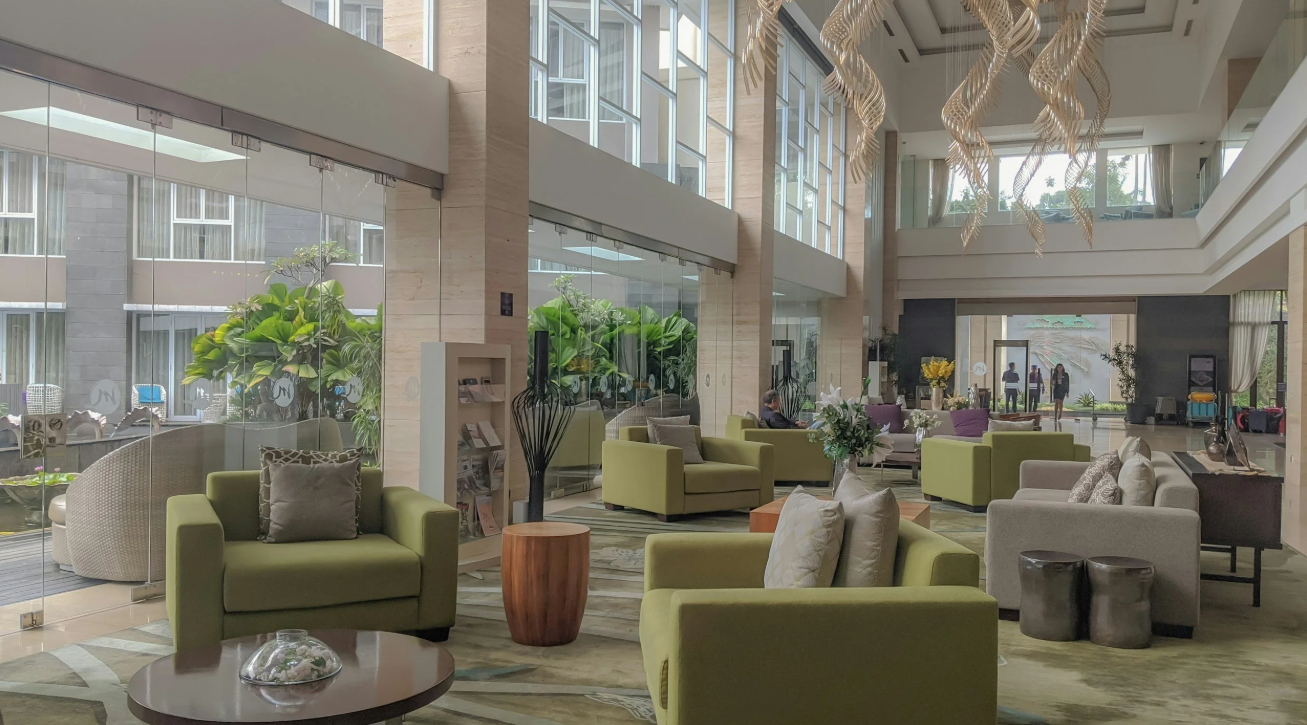
lobby spaces often feature calm, elegant music
restaurants may have slightly more rhythmic music that supports conversation
spas typically use slow, ambient soundscapes designed to encourage relaxation
These environments recognize that music should match the function of the space.
The key lesson:
Sound reinforces brand identity and atmosphere.
The Common Principle: Atmosphere is Designed
Although Disney parks, casinos, and luxury hotels serve very different purposes, they share an important design philosophy. The all recognize that environments are multisensory experiences.
Architecture, lighting, scent, materials, and sound work together to shape how people feel in a space. When sound is designated intentionally, it becomes part of the overall experience.
What This Means for Hospitality Design
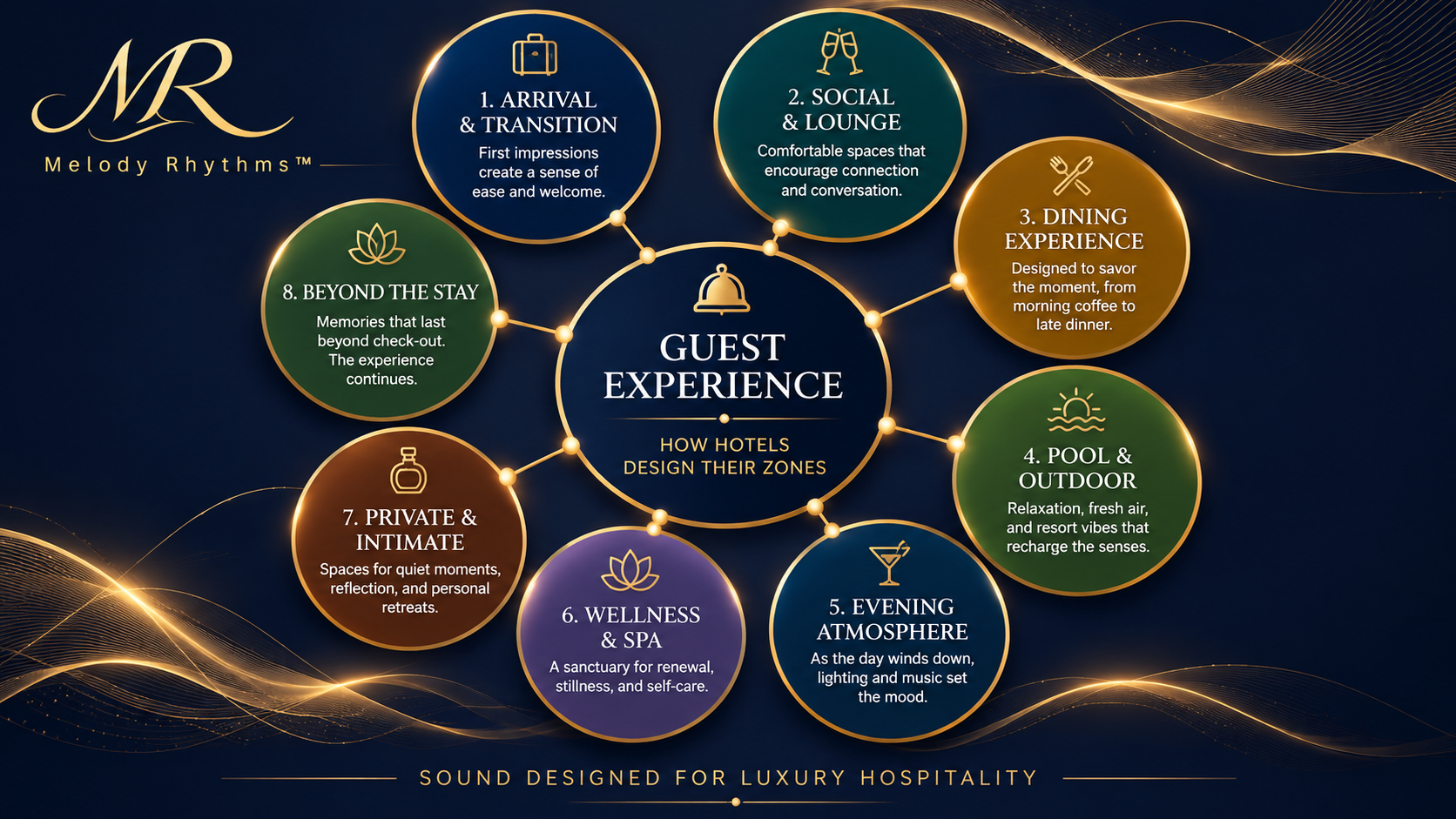
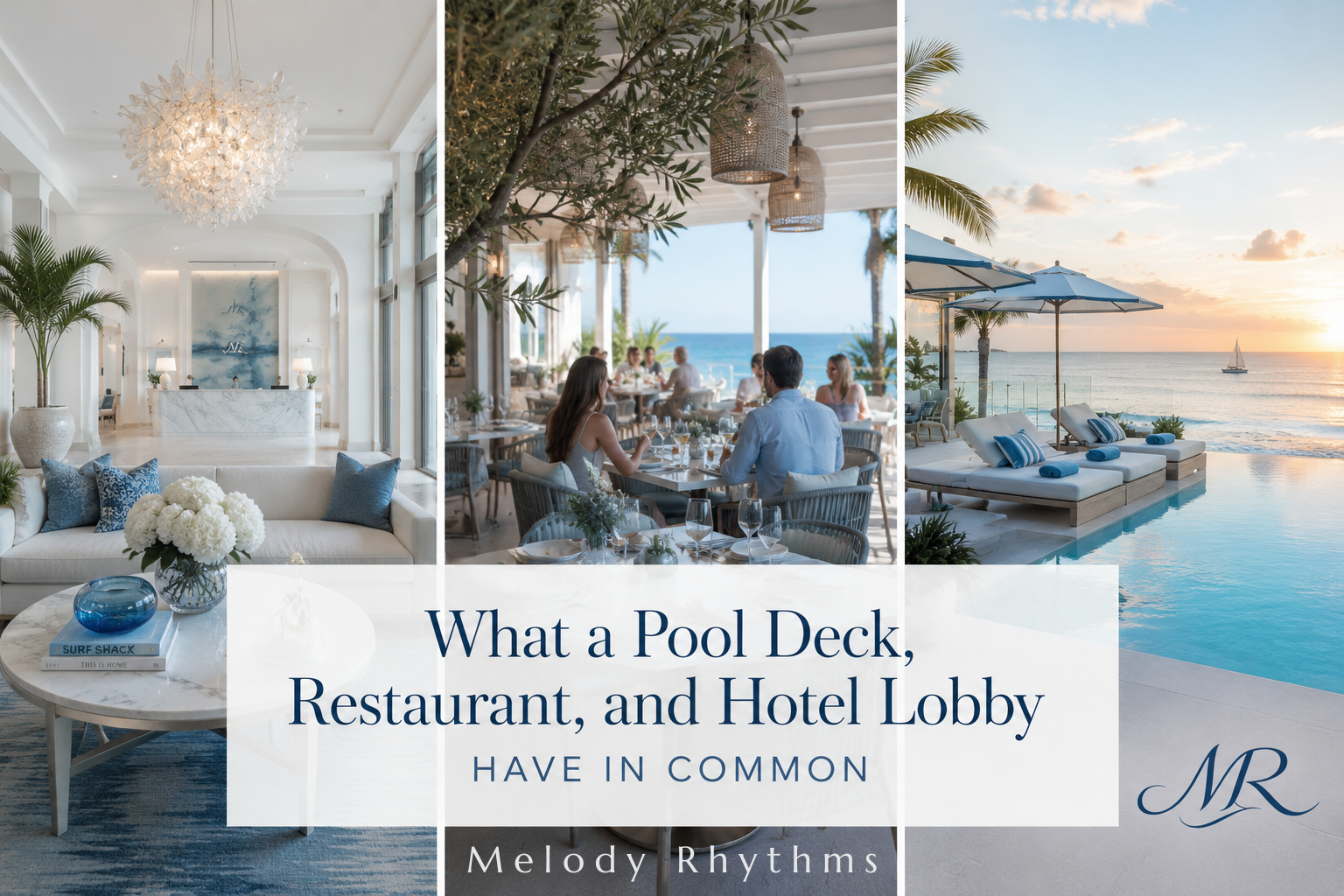
Many hospitality spaces still rely on a single playlist for an entire property. But different areas of a building have different purposes.
Arrival areas need calm, welcoming atmospheres
Dining areas need music that supports conversation
Spa environments require slow, relaxing sound textures
“Designing music in zones allows the atmosphere to evolve naturally as guests move through a space.”
The world’s most memorable environments rarely leave atmosphere to chance. From theme parks to casinos to luxury resorts, sound plays a quiet but powerful role in shaping experience.
When music is designed with the same care as architecture and lighting, it becomes more than background noise. It becomes part of the design of the space itself.
At Melody Rhythms, music is designed to support the atmosphere of each space, creating environments where sound and design work together.
Music for the Arrival Moment
The arrival moment sets the tone for a guest’s experience. Discover how thoughtfully curated music can help elevate valet entrances, lobby transitions, and hospitality arrival spaces.
The Sound of Arrival in Hospitality Spaces
There’s a quiet moment that defines the beginning of a guest’s experience.
A car pulls up to the valet. Doors open. Luggage is lifted from the trunk. The soft moment of people entering and leaving blends with the rhythm of the property itself.
“Before a guest even reaches the lobby doors, the atmoshpere has already begun.”
Music in these arrival spaces should feel effortless. Present, but never intrusive. The most successful environments use instrumental sound that is warm, modern, and gently rhythmic, creating a sense of calm movement as guests transition from the exterior to the interior of the property.
This style works beautifully for hotel valet entrances, restaurant arrival areas, private clubs, and golf properties where the arrival experience is part of the destination.
Within the Melody Rhythms collections, Zone 2 was curated for these types of transitional spaces - lounge areas, waiting environments, and moments where guests begin to settle into the atmosphere in the venue.
Carefully designed sound environments such as those in Zone 1 and Zone 2 help establish that first impression with subtle sophistication.
Together, these Zones create a seamless transition from arrival to social space.
Recommended Sound Environments
Zone 1 - Arrival & Lobby Atmosphere
Calm, refined instrumentals designed for hotel entrances, reception areas, and quiet lobby spaces.
Zone 2 - Lounge, Bar, and Waiting Areas
Smooth lounge textures for transitional hospitality environments where guests begin to settle into the venue.
The arrival moment may last only a few minutes, but it quietly defines the beginning of the guest experience. A thoughtfully curated sound environment ensures that the first impression of a venue feels calm, welcoming, and refined from the very start.
When Someone Can Press Play and Trust the Space
Designed sound for real spaces is not heard first — it’s felt over time.
There is a moment in every space when sound disappears — not because it’s gone, but because it’s doing its job.
That moment is trust.
When a hotel lobby, lounge, or mezzanine can press play and allow the music to run for hours without interruption, without fatigue, without distraction, something important has already happened.
The value was created long before the music started.
Background music is often treated as an afterthought — a playlist, a filler, something to occupy silence. But designing sound for real spaces is not about filling quiet. It’s about shaping how people feel without asking them to notice why.
What most people never see is the work that happens before a single track is approved. The ideas that don’t make it. The restraint to remove something that sounds good but disrupts flow. The repeated listening, not for enjoyment, but for endurance. The sequencing so nothing jars. The patience required to let a space breathe.
True environmental music is not designed to impress in the first minute. It is designed to hold a room for hours.
That kind of trust is built through intention. Through understanding how a space is used throughout the day. Through knowing when music should lead and when it should disappear. Through respecting conversation, movement, light, and mood as much as melody and rhythm.
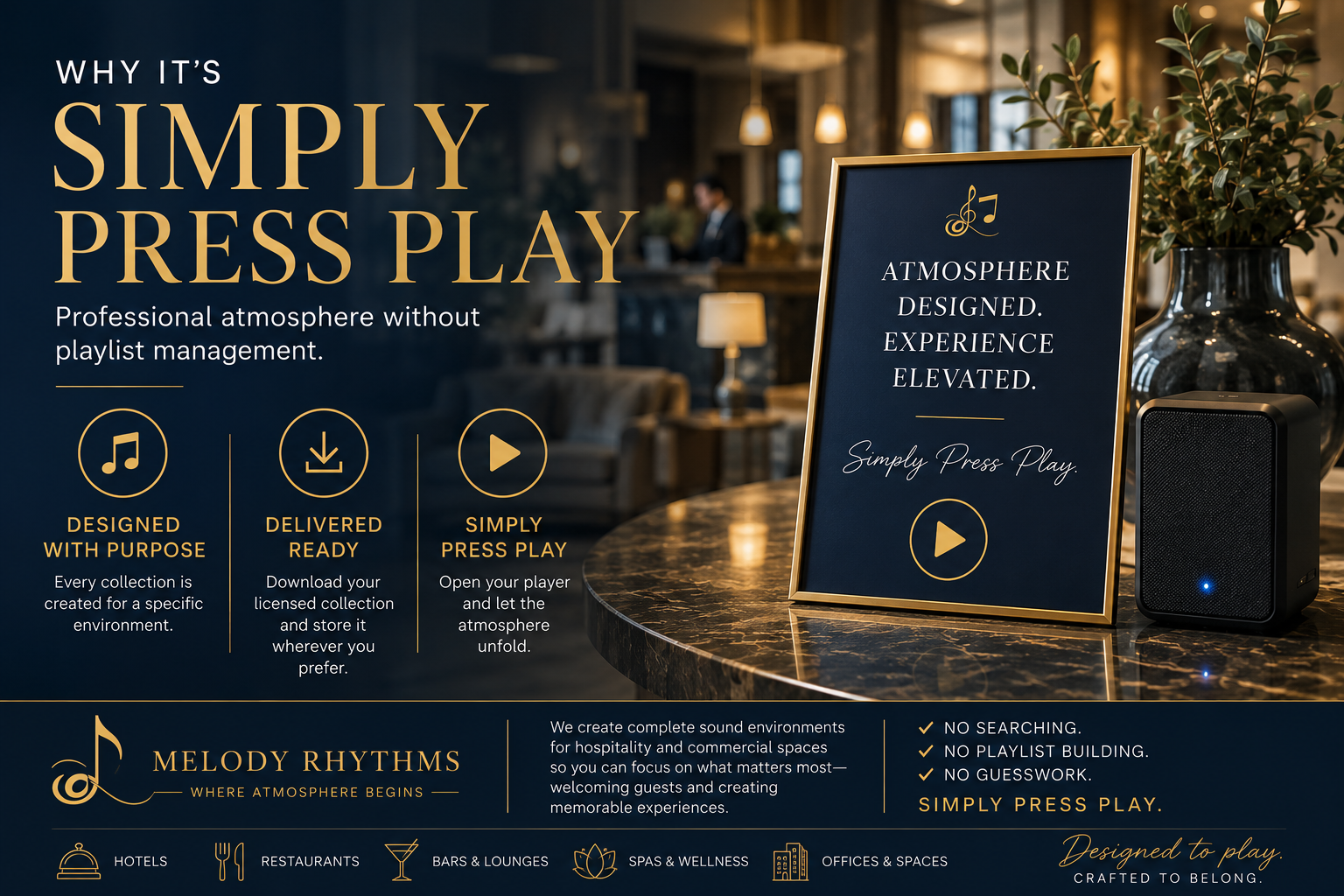
By the time someone presses play and walks away — confident that the space will remain balanced, elegant, and consistent — the real work is already complete.
That is the difference between music as content and music as infrastructure.
And that is why value is not measured in tracks or minutes, but in the quiet confidence that nothing needs to be adjusted.
When someone can press play and trust the space for hours, the value was created long before the music started.
Designing Sound for Arrival
Music designed for arrival is not meant to entertain.
It is meant to welcome.
Not every space needs to be quiet. And not every environment is meant to feel subdued.
Live music, energetic playlists, and high-impact sound all have their place—especially when the goal is excitement, celebration, or performance. In those moments, music is meant to be noticed.
But the experience begins long before that.
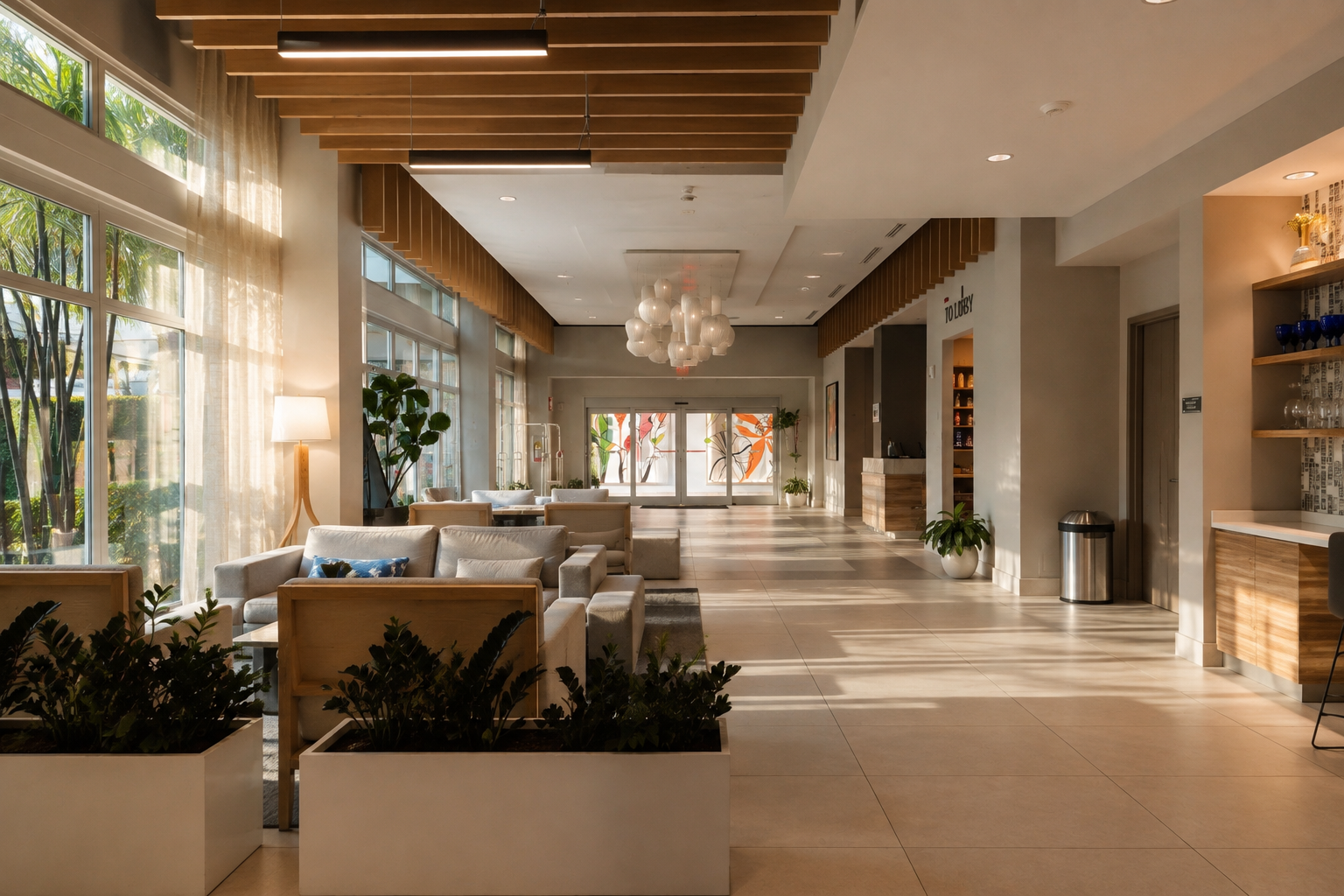
Arrival spaces—lobbies, entrances, waiting areas, transitions—serve a different purpose. They introduce the environment. They set expectations. They invite guests in.
This is where sound must work differently.
Music designed for arrival is not meant to entertain.
It is meant to welcome.
Generic background music often fills this role by default, but without intention. When sound is treated as filler, it becomes either forgettable or mismatched—present, but disconnected from the space it’s meant to support.
The result is an environment that feels unfinished.
Designing sound for arrival means understanding what guests need in that moment:
· Orientation
· Comfort
· A sense of ease
· A clear emotional tone
Music in these spaces should calm without dulling, elevate without overwhelming, and feel aligned with the architecture, lighting, and flow of movement.
It should prepare guests for what comes next—whether that’s dining, gaming, conversation, or entertainment.
This is where curated sound design becomes essential.
Rather than relying on one-size-fits-all background music, sound can be shaped to reflect the identity of the space itself—creating a seamless transition from outside world to interior experience.
This approach doesn’t replace energy where it belongs.
It frames it.
At Melody Rhythms, sound is designed with this transition in mind—treating arrival not as an afterthought, but as the first chapter of the guest experience.
Because the way a space sounds when you enter often determines how long you choose to stay.
When Music Becomes Noise
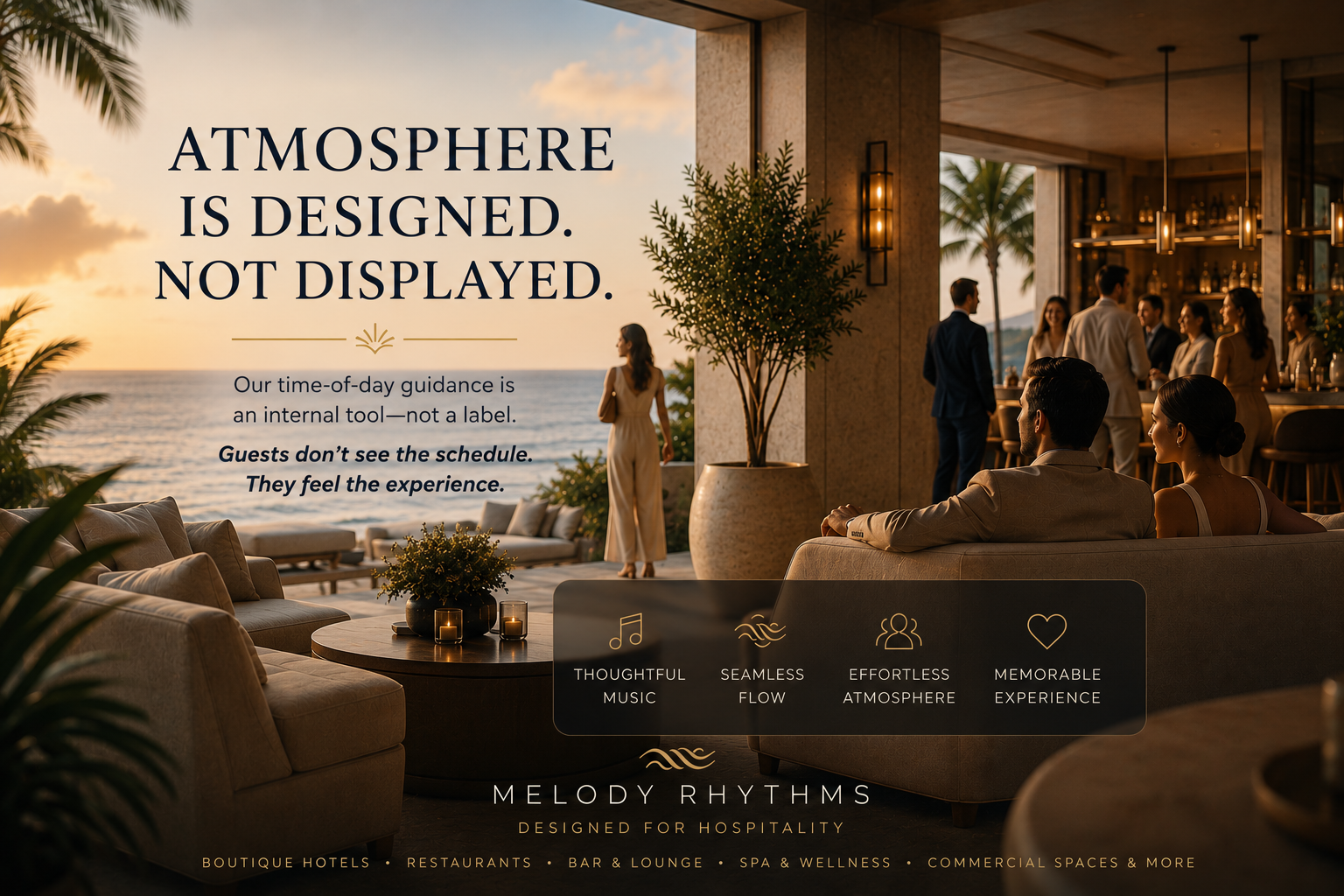
True atmosphere does not demand attention.
It supports it
The Difference Between Filling a Room, and Shaping It
There is a particular kind of silence that happens in beautifully designed spaces - the kind layered with marble floors, warm lighting, textured fabrics, and intentional architecture. It’s not the absence of sound. It’s the presence of balance.
And then, slowly, something shifts.
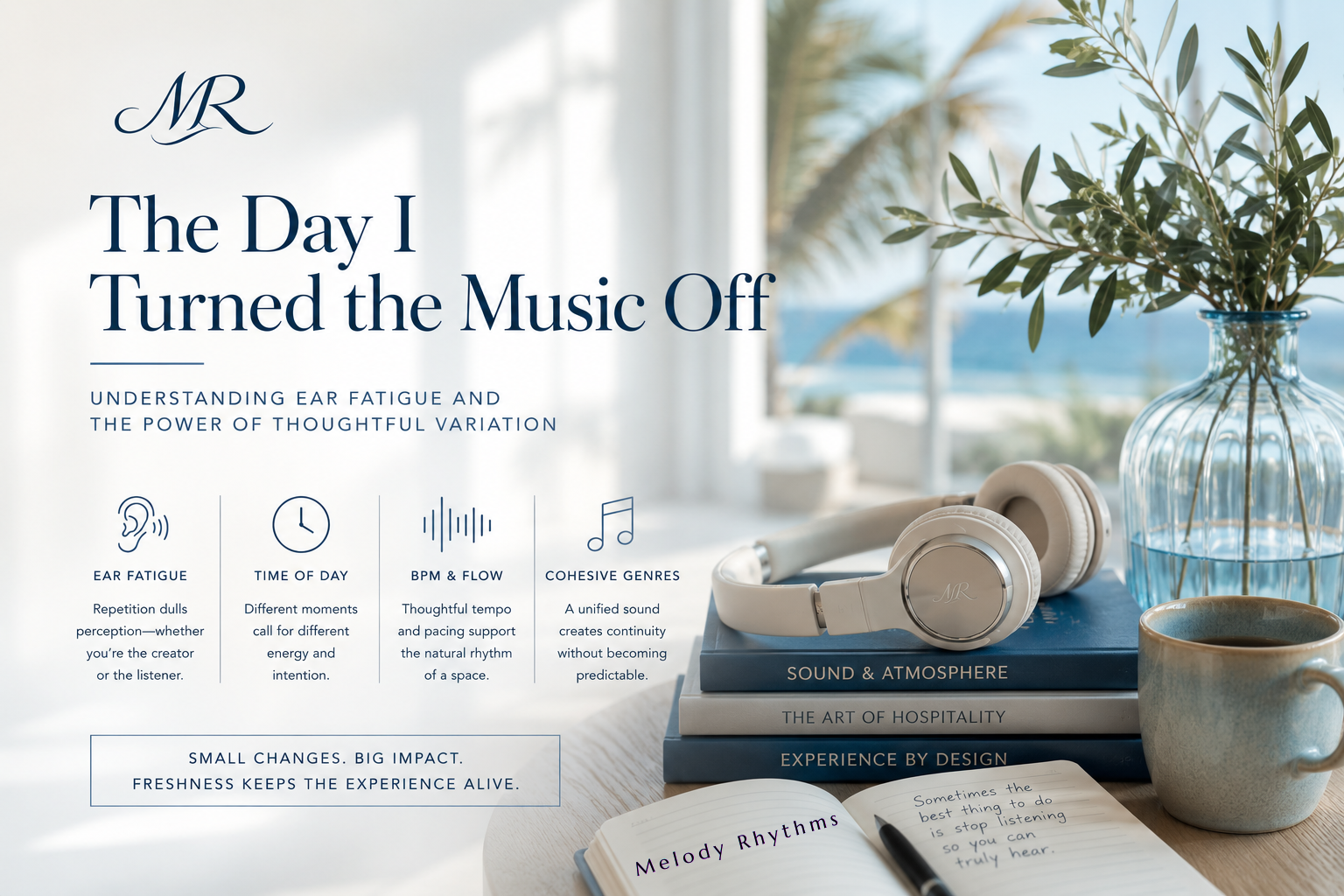
A playlist repeats. A vocal cuts through a quiet conversation. The tempo feels slightly rushed for a mid-morning lobby. A chorus arrives where a soft instrumental should have lingered. No one announces it, but the atmosphere tightens. Staff adjust the volume. Someone reaches for the skip button. The music - once meant to enhance the environment, begins to compete with it.
This is the moment when music becomes noise.
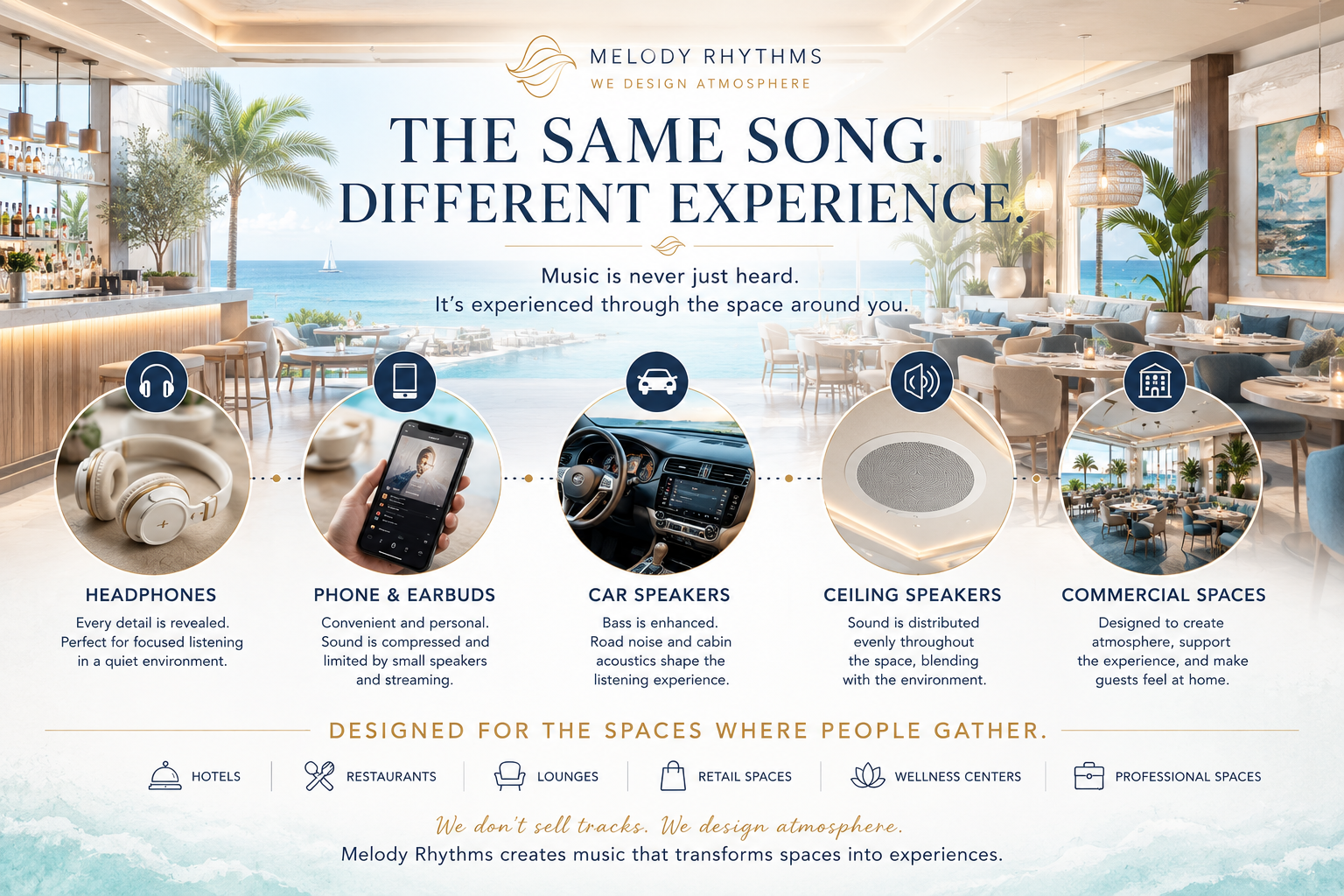
In modern commercial spaces - hotels, restaurants, lounges, medical offices - sound is often treated as a utility rather than a design element. Streaming platforms offer convenience, but not intention. Playlists are assembled for mass listening, not for the specific rhythm of a space at 9:00 a.m., 2:00 p.m., or 8:30 p.m. They fill silence, but they rarely shape experience.
Yet music has architectural power. It can lengthen a guest’s stay without them noticing. It can soften transitions. It can elevate a room from functional to memorable. When designed with structure - tempo, mood, energy curves, and time-of-day flow - it becomes invisible in the most sophisticated way possible.
True atmosphere does not demand attention - It supports it.
The difference between noise and design is intention.
And in spaces where every material, scent, and lighting choice is curated, sound deserves the same level of thought.
Perhaps the solution is not louder music or better playlists, but more thoughtful design. A slower build in the morning. A warmer tone at dusk. An energy curve that understands how a space breathes throughout the day.
Melody Rhythms was shaped around that philosophy - the belief that background music should feel natural to its environment, almost unnoticed, yet deeply felt. Through curated zones and structured collections, sound is allowed to settle into the room rather than sit on top of it.
When music is given intention, it softens the edges of a space. It carries conversation without interrupting it. It lingers without asking to be heard.
And in that quiet alignment, atmosphere returns.
Where Atmosphere Begins
A New A
pproach to Curated Sound
Music should be felt - not layered on top.
A New Approach to Curated Sound
Some of the most memorable spaces are not defined by what you see, but by how you feel the moment you arrive in a space.
Sound plays a powerful role in shaping that experience. When thoughtfully designed, mastered, curated, and polished, music supports conversation, guides energy, and reinforces the identity of a space without demanding attention. When it is treated as an afterthought, it can just as easily distract or dilute the atmosphere.
“Music should be felt - not layered on top”
Melody Rhythm was created to bridge the gap between design and sound.
The idea began with a simple observation - beautifully designed spaces deserve music that is just as considered as the furniture, lighting, and layout. Sound should feel integrated, not layered on top.
Rather than focusing on playlists or trends, Melody Rhythms approaches music as part of the environment itself - quietly shaping mood, flow, and presence. This philosophy guides everything that follows. It is the core foundation, the heartbeat, and DNA of Melody Rhythms.
This is where the story begins.