

How Environments Influence Emotional Behavior
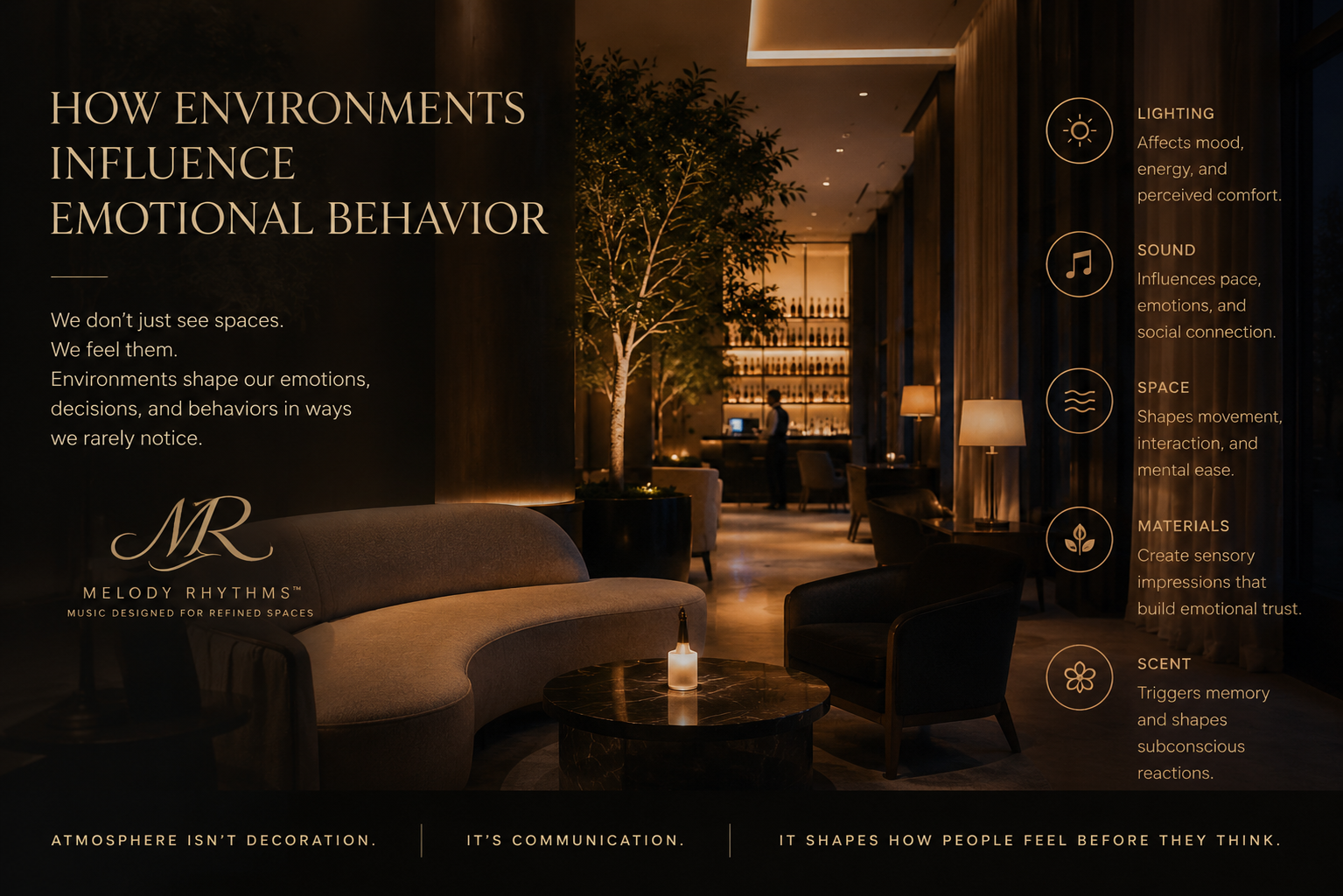
People rarely notice how deeply environments influence their emotional state, only that certain spaces feel calming, tense, luxurious, warm, overstimulating or unforgettable.
Before a conservation begins, before a meal arrives, before a guest reaches a hotel room, the environment has already begun shaping perception.
Lighting, sound, spacing, materials, scent, movement, and pacing quietly influence human behavior in ways most people never consciously recognize.
Some spaces slow people down.
Some make them restless.
Some invite conversations effortlessly, while others create emotional distance without explanation.
Atmosphere is never accidental.
Even silence communicates something.
The environments people remember most are the ones that understand emotional pacing.
Not every atmosphere should energize.
Not every space should demand attention.
Some environments are designed to soften transitions, encourage conversation, create calm, or simply allow people to feel present.
Because atmosphere is more than a design layer.
It is the emotional language of a space.
