The Hidden Power of Sound in Hospitality Design
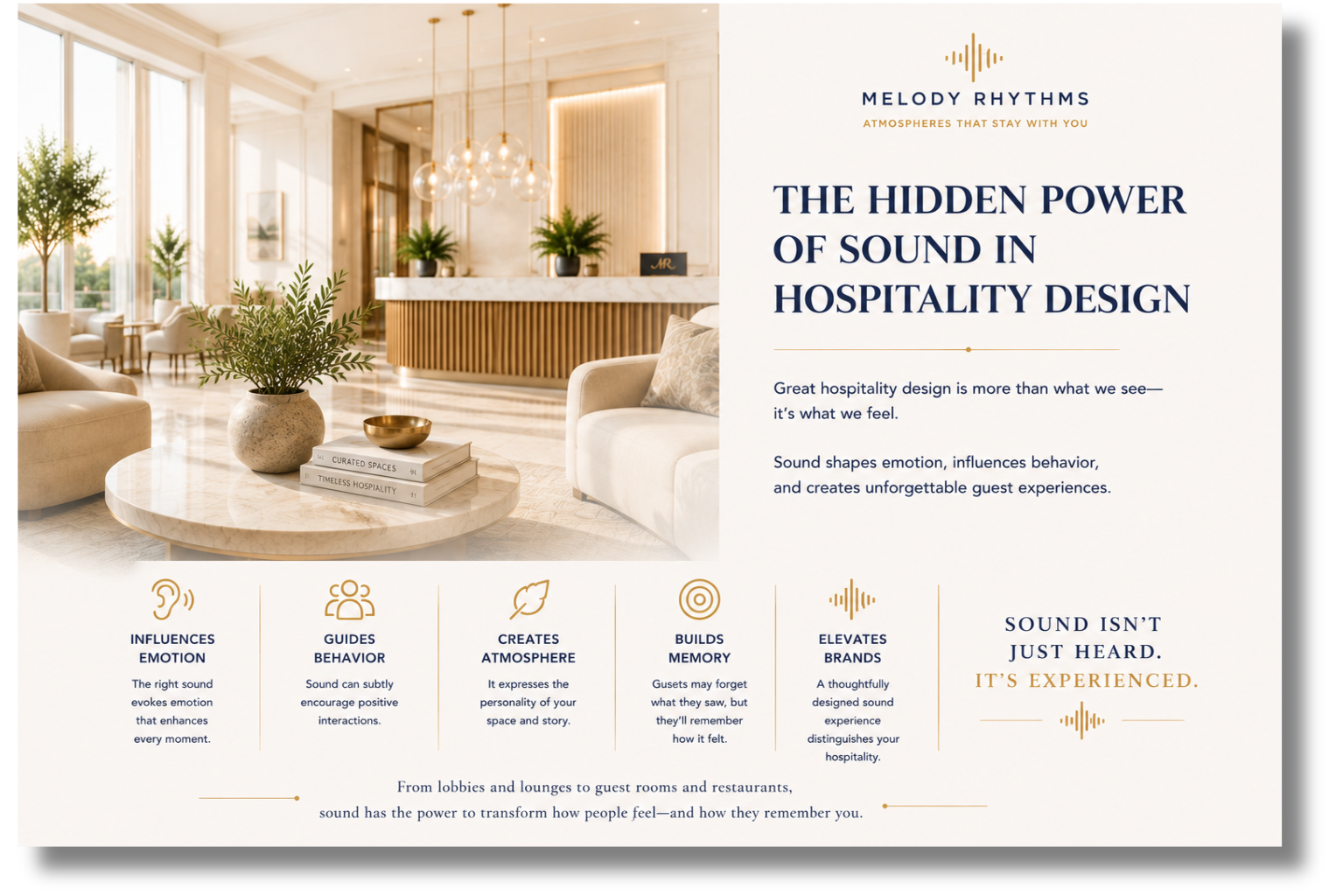
Many of the world’s most immersive environments have something in common.
Theme parks, casinos, and luxury resorts all carefully design how their spaces sound.
While guests may notice architecture, lighting, and decor, sound often works quietly in the background, shaping the emotional atmosphere of a place. But in the best designed environments, music and sound are never random. They are intentional.
By looking at how different industries use sound, we can learn important lessons about designing atmosphere in hospitality spaces.
What Disney Teaches Us About Environmental Storytelling
The Walt Disney Company parks are masters of its own sound environment. As visitors move from one land to another, the music gradually changes to match the theme of the environment.
Examples include:
nostalgic ragtime music in Main Street areas
tropical percussion in jungle themed areas
futuristic ambient sounds in science fiction themed spaces
These sound transitions help guests feel like they are moving between different worlds.
The key lesson:
Sound supports the story of the space.
What Casinos Teach Us About Environment Psychology
Casinos are designed with incredible attention to human behavior. Everything from lighting to carpet patterns is used to influence how guests experience the gaming floor.
Sound also plays an important role.
Casinos often use:
rhythmic music to maintain energy
celebrity sound effects from machines
layered background music to create excitement
The goal is to create an environment that feels lively and engaging without becoming overwhelming.
The key lesson:
Sound can influence energy levels and attention.
What Luxury Hotels Teach Us About Atmosphere
Luxury hospitality brands understand that atmosphere is part of their identity.
Companies like Four Seasons Hotels and Resorts and Aman Resorts carefully curate music for different areas of their properties.
For example:
lobby spaces often feature calm, elegant music
restaurants may have slightly more rhythmic music that supports conversation
spas typically use slow, ambient soundscapes designed to encourage relaxation
These environments recognize that music should match the function of the space.
The key lesson:
Sound reinforces brand identity and atmosphere.
The Common Principle: Atmosphere is Designed
Although Disney parks, casinos, and luxury hotels serve very different purposes, they share an important design philosophy. The all recognize that environments are multisensory experiences.
Architecture, lighting, scent, materials, and sound work together to shape how people feel in a space. When sound is designated intentionally, it becomes part of the overall experience.
What This Means for Hospitality Design
Many hospitality spaces still rely on a single playlist for an entire property. But different areas of a building have different purposes.
Arrival areas need calm, welcoming atmospheres
Dining areas need music that supports conversation
Spa environments require slow, relaxing sound textures
“Designing music in zones allows the atmosphere to evolve naturally as guests move through a space.”
The world’s most memorable environments rarely leave atmosphere to chance. From theme parks to casinos to luxury resorts, sound plays a quiet but powerful role in shaping experience.
When music is designed with the same care as architecture and lighting, it becomes more than background noise. It becomes part of the design of the space itself.
At Melody Rhythms, music is designed to support the atmosphere of each space, creating environments where sound and design work together.