How Hotels Design Their Zones
A Journey Through the Guest Experience
When we step into a beautifully designed hotel, we often notice elegance of the architecture, the comfort of the furnishings, or the warmth of the welcome. What many guests don’t realize is that every space has been intentionally designed to create a specific feeling, and guide them naturally through their stay.
Great hotels don’t simply provide rooms, they create experiences.
Every area of the property has a purpose. From the moment a guest arrives until the moment they depart, each transition is carefully planned to make the journey feel effortless, comfortable, and memorable.
The Arrival Experience
The guest experience begins long before the front desk.
Valet attendants, bell services, the porte cochère, concierge staff, and reception all work together to create a welcoming first impression. This is where guests begin forming opinions about the property within just a few moments of arrival.
The goal is simple - Make guests feel confident that they’ve chosen the right destination.
Social Spaces
After check-in, mezzanines, coffee bars, libraries, and business lounges encourage people to slow down, meet friends or colleagues, enjoy a quiet conversation, or simply observe the energy of the hotel.
These spaces often become the heart of the property because they balance activity with comfort.
Dining Experiences
Restaurants are designed differently from lounges because the guest’s expectations have changed.
Lighting, furniture arrangement, table spacing, service flow, and décor all work together to encourage guests to linger, enjoy exceptional cuisine, and create memorable dining experiences.
Whether it’s breakfast, an intimate dinner, or outdoor dining under the evening sky, each setting supports a different mood.
Outdoor Experiences
Courtyards, gardens, pools, terraces, and beach clubs offer a change of pace. These areas invite guests to reconnect with nature, enjoy fresh air, and experience the destination beyond the walls of the hotel.
Many properties use landscaping, water features, shaded seating, and open air architecture to create a sense of escape.
Evening Experiences
As the day transitions into night, the atmosphere evolves once again.
Cocktail lounges, rooftop bars, piano lounges, and wine bars are designed to encourage conversation, celebration, and relaxation. Lighting becomes warmer, spaces feel more intimate, and the overall energy shifts to reflect the evening.
This gradual transition helps guests experience the property differently throughout the day.
Wellness and Renewal
Spa receptions, relaxation lounges, treatment rooms, fitness centers, and wellness spaces are intentionally designed to reduce stress and promote restoration.
Everything from the materials and lighting to the pace of the environment is selected to encourage guests to slow down and recharge.
These spaces remind us that hospitality isn’t only about luxury, it’s also about well being.
Guest Retreat
Hallways, guest rooms, suites, and executive floors represent the most personal part of the guest journey. In these spaces, privacy, comfort, and tranquility become the priority.
Every design decision supports restful sleep, relaxation, and the feeling of having a place to call home, even if only for a few nights.
Events and Shared Moments
Many hotels also include ballrooms, conference centers, wedding venues, and meeting spaces.
These areas host business conferences, celebrations, family gatherings, and milestone events. Although each event may be different, the goal remains the same, creating an environment where people can connect and create lasting memories.
Behind the Scenes
Guests rarely see the service corridors, housekeeping operations, engineering departments, or back-office teams.
Yet these behind-the-scenes are essential to delivering a seamless guest experience. Every polished lobby, spotless room, and perfectly prepared event reflects the work of dedicated professionals operating behind the curtain.
One Journey, Many Experiences
The beauty of hospitality design lies how naturally each space flows into the next. Guests rarely think about these transitions because the best hotels make them feel effortless.
Every zone has a purpose. Every transition has intention. Every detail contributes to the overall guest experience.
At Melody Rhythms, we believe atmosphere is created through the thoughtful combination of architecture, interior design, lighting, service, nature, and sound. When these elements work together, they create experiences that guests don’t just remember - they feel.
Because exceptional hospitality isn’t built around a single space. It’s designed throughout the entire journey.
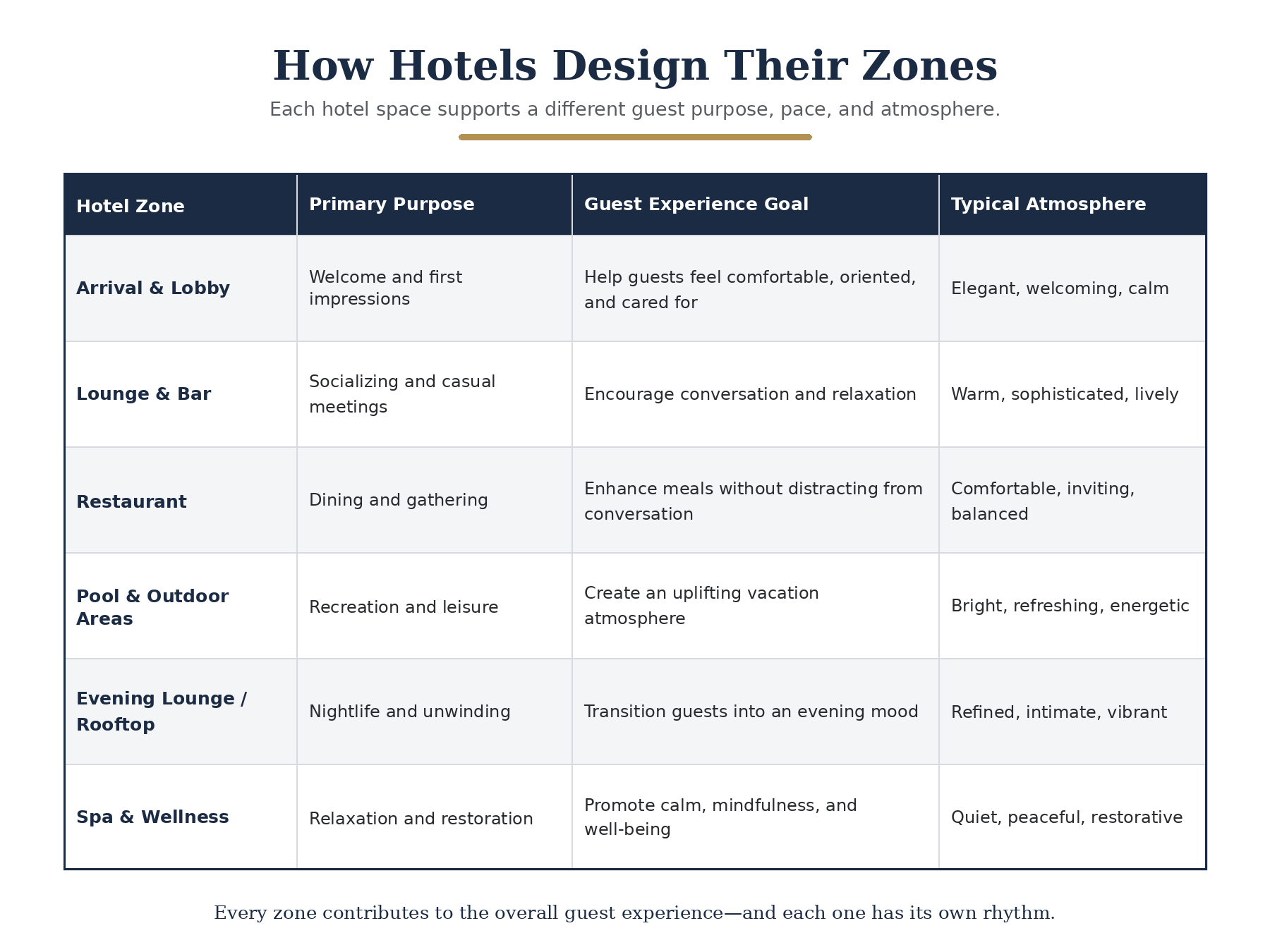
Great hotels are intentionally designed as a collection of experiences rather than a single space. Each zone has a different purpose, a different pace, and a different emotional goal. From the welcoming energy of the lobby to the peaceful atmosphere of the spa, every environment contributes to the overall guest experience. Understanding these transitions is one of the inspirations behind how I think about hospitality, atmosphere, and music at Melody Rhythms.