When Someone Can Press Play and Trust the Space
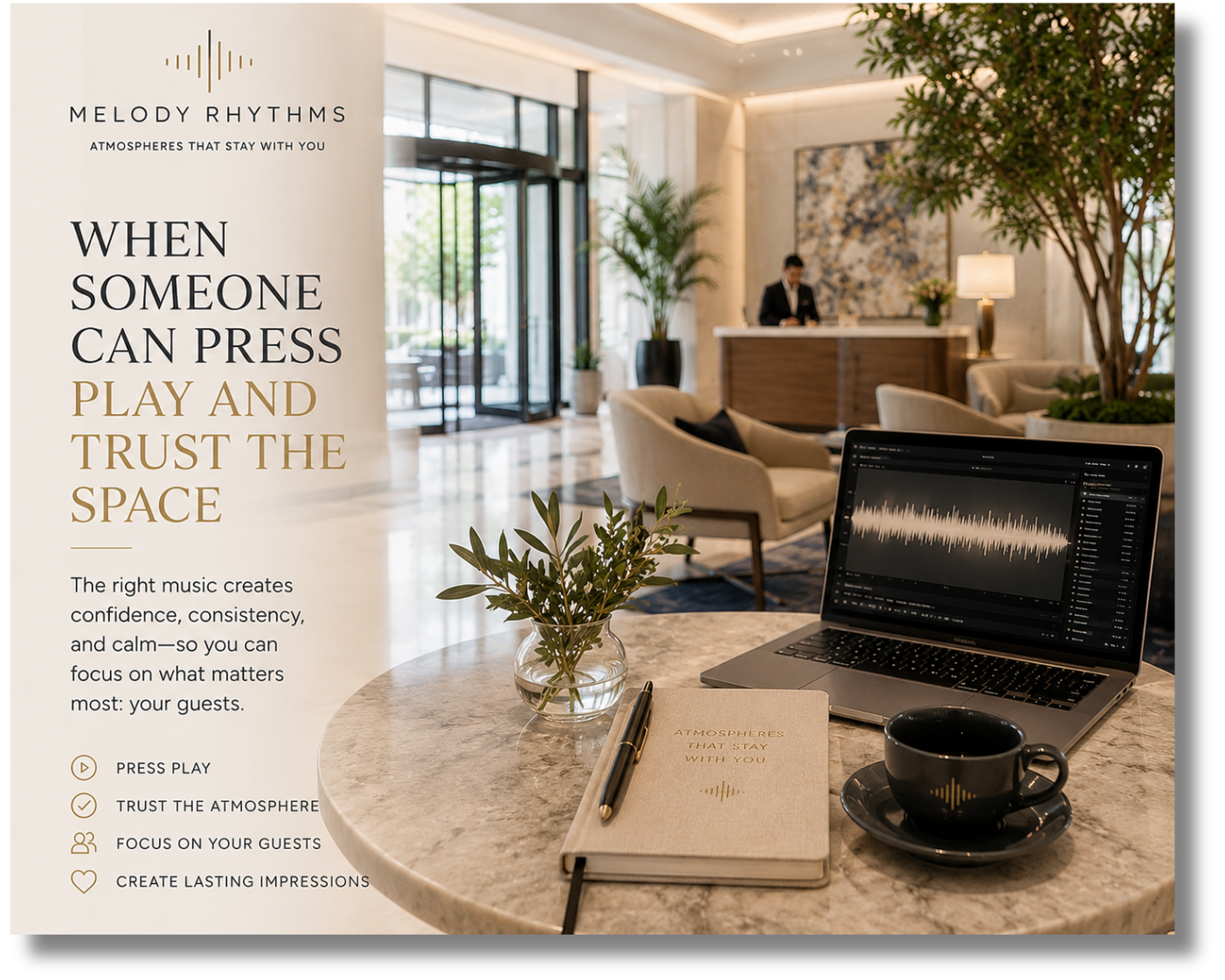
Designed sound is felt over time.
That is the difference between music as content and music as infrastructure.
Designed sound for real spaces is not heard first — it’s felt over time.
There is a moment in every space when sound disappears — not because it’s gone, but because it’s doing its job.
That moment is trust.
When a hotel lobby, lounge, or mezzanine can press play and allow the music to run for hours without interruption, without fatigue, without distraction, something important has already happened.
The value was created long before the music started.
Background music is often treated as an afterthought — a playlist, a filler, something to occupy silence. But designing sound for real spaces is not about filling quiet. It’s about shaping how people feel without asking them to notice why.
What most people never see is the work that happens before a single track is approved. The ideas that don’t make it. The restraint to remove something that sounds good but disrupts flow. The repeated listening, not for enjoyment, but for endurance. The sequencing so nothing jars. The patience required to let a space breathe.
True environmental music is not designed to impress in the first minute. It is designed to hold a room for hours.
That kind of trust is built through intention. Through understanding how a space is used throughout the day. Through knowing when music should lead and when it should disappear. Through respecting conversation, movement, light, and mood as much as melody and rhythm.
By the time someone presses play and walks away — confident that the space will remain balanced, elegant, and consistent — the real work is already complete.
That is the difference between music as content and music as infrastructure.
And that is why value is not measured in tracks or minutes, but in the quiet confidence that nothing needs to be adjusted.
When someone can press play and trust the space for hours, the value was created long before the music started.