Designing Sound for Arrival
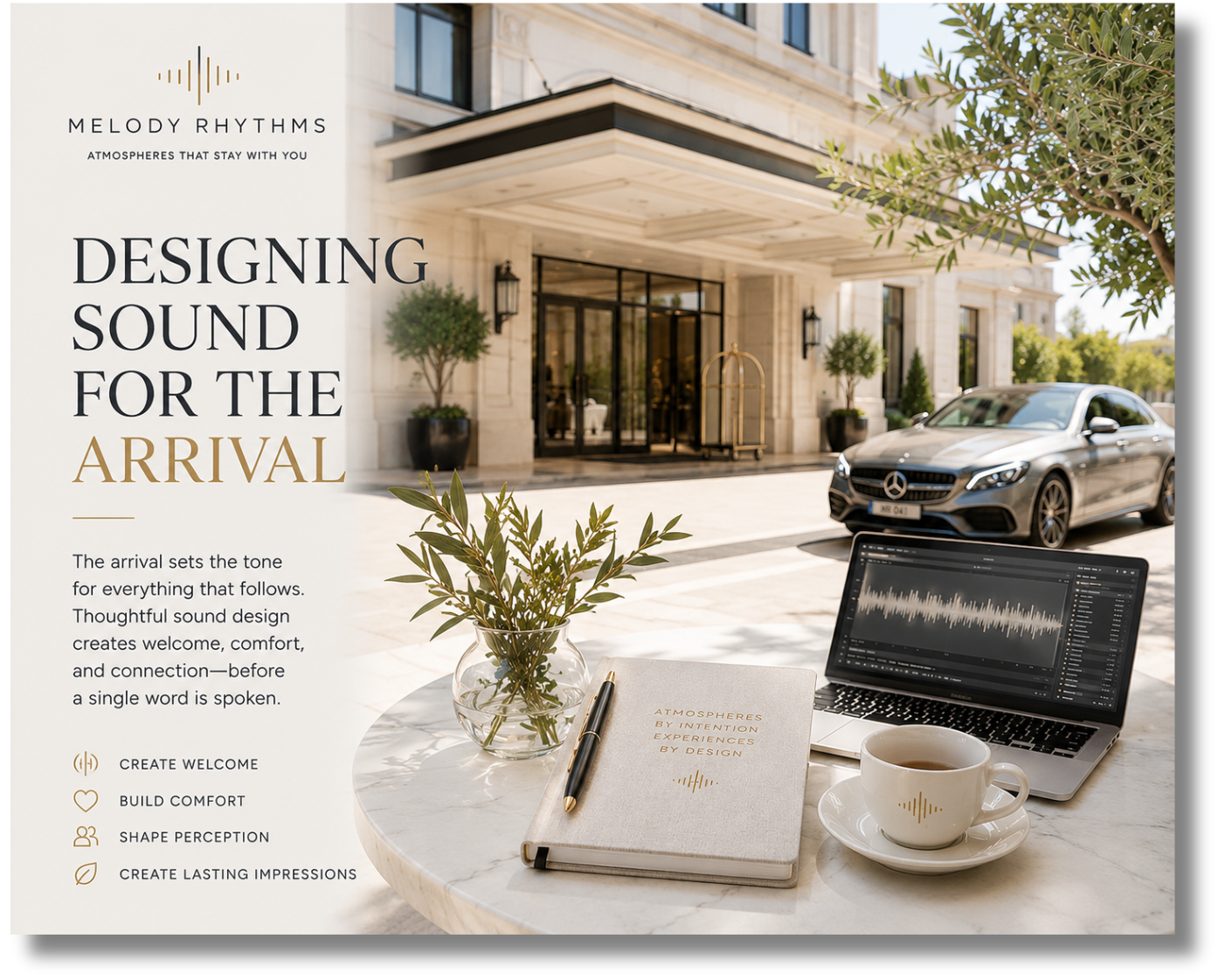
Music designed for arrival is not meant to entertain.
It is meant to welcome.
Not every space needs to be quiet. And not every environment is meant to feel subdued.
Live music, energetic playlists, and high-impact sound all have their place—especially when the goal is excitement, celebration, or performance. In those moments, music is meant to be noticed.
But the experience begins long before that.
Arrival spaces—lobbies, entrances, waiting areas, transitions—serve a different purpose. They introduce the environment. They set expectations. They invite guests in.
This is where sound must work differently.
Music designed for arrival is not meant to entertain.
It is meant to welcome.
Generic background music often fills this role by default, but without intention. When sound is treated as filler, it becomes either forgettable or mismatched—present, but disconnected from the space it’s meant to support.
The result is an environment that feels unfinished.
Designing sound for arrival means understanding what guests need in that moment:
· Orientation
· Comfort
· A sense of ease
· A clear emotional tone
Music in these spaces should calm without dulling, elevate without overwhelming, and feel aligned with the architecture, lighting, and flow of movement.
It should prepare guests for what comes next—whether that’s dining, gaming, conversation, or entertainment.
This is where curated sound design becomes essential.
Rather than relying on one-size-fits-all background music, sound can be shaped to reflect the identity of the space itself—creating a seamless transition from outside world to interior experience.
This approach doesn’t replace energy where it belongs.
It frames it.
At Melody Rhythms, sound is designed with this transition in mind—treating arrival not as an afterthought, but as the first chapter of the guest experience.
Because the way a space sounds when you enter often determines how long you choose to stay.